
By Josh
On Wednesday August 24th, 2022, President Joe Biden made the announcement that he would have the Department of Education forgive up to $20,000 of federal student loan debt to individuals making less than $125,000 annually, as well as extend the freeze on student loan interest accrual throughout the rest of 2022. Students who’ve received Pell Grants would have $20,000 canceled, whereas students who did not would have $10,000. This $125,000 threshold will be based on personal income, so if a person’s income in either the 2020 or 2021 tax years was below these income caps, they are eligible for debt forgiveness per the Biden Administration. This also applies to parents who claim a student on their taxes, so if one’s parents file jointly, student loan debt between $10,000-$20,000 will be forgiven to borrowers earning less than $250,000 annually.
Alright, phew, the boring ass news headline is out of the way. However, this news is anything but boring, in fact it’s rather exciting for not only myself but an entire generation of people crippled by the student loan crisis. Does this solve the problem? No. For example, this executive order does nothing to address the predatory private loans students often have to take out to pay for school. For many, FAFSA approved loans through the federal government just simply aren’t enough to cover tuition rates, on-campus housing, books, and other expenses associated with being a college student.
Just this January, Navient “agreed to cancel $1.7 billion in debt owed by more than 66,000 borrowers across the U.S. and pay over $140 million in other penalties to settle allegations of abusive lending practices”.

Pennsylvania’s Attorney General Josh Shapiro stated that Navient “engaged in deceptive and abusive practices, targeted students who it knew would struggle to pay loans back, and placed an unfair burden on people trying to improve their lives through education.” Not to mention, the issue of Navient advising students and graduates on partaking in loan forbearance, which ultimately means that loan payments can be paused or reduced for a determined amount of time. However, that doesn’t stop lenders from charging interest on these loans, so ultimately the debt continues to pile up with interest, and borrowers end up coming out of forbearance with an even more insurmountable amount of debt than when they started. This is one mere example of these practices, but to believe this is an isolated scandal is delusional thinking.
Even with federal loans, there is plenty of evidence to suggest predatory lending takes place on a daily basis. For example, not once was I ever required to take a financial literacy course prior to taking out a federal student loan, nor was I directly advised about what my interest rates would be, what an ideal payment plan would be after college, or how much in interest I would pay in total when I began paying these loans back after graduation following my setting up of a payment plan. There’s a lot of factors at play for why people can find themselves in this situation, but I believe a lot of the blame has to do with funding for secondary and higher education getting slashed year after year by states and localities. You think a college or high school is going to cut Physics, algebra, or history out of the curriculum first? Of course not, those are far too important of subjects to dismiss. So ultimately, they end up cutting electives, which would include classes like personal finance. Because who’s ever going to need to know how to file taxes, understand compounding interest, or creating personal budgets?
Literally everyone.
Not to mention, we haven’t even discussed the racial divide among student loan borrowers, seeing as the Brookings Institute as far back as 2016 stated “The moment they earn their bachelor’s degrees, black college graduates owe $7,400 more on average than their white peers ($23,400 versus $16,000, including non-borrowers in the averages). But over the next few years, the black-white debt gap more than triples to a whopping $25,000. Differences in interest accrual and graduate school borrowing lead to black graduates holding nearly $53,000 in student loan debt four years after graduation—almost twice as much as their white counterparts.” This all has to do with the wealth inequality among the various races in this country, and how the statistically relevant difference between the generational wealth of whites and blacks merely adds kerosene soaked rags to a wildfire. Because of the noted issues like private loans, encouraged loan forbearance, the lack of education and transparency among lenders, plus the stark racial divide among borrowers, we know that this war is far from being won.
However, does this move put us heading in the right direction with this crisis? Abso-fucking-lutely. Moving forward, if I were a policy advisor to the President, I would strongly urge the nationalization of all student loan debt, as well as eliminate all interest rates on issued student loans. There is simply no need to continue private lending when the aforementioned evidence of predatory lending practices by the private sector continues to spiral out of control. Private lenders, as well as the federal government, should never profit off of Americans trying to educate themselves and in turn, chase the American dream.
Some of you might be thinking, “But Josh, isn’t this only going to increase the national debt? Won’t this end up costing taxpayers more money in times when inflation and price gouging are running rampant? I paid off my student loan debt? Why should others get off the hook for their decisions?” Let’s address these concerns one by one.

The National Debt
The national debt is a non-factor and is a talking point for politicians and braindead libertarians to harp on. Sure, the national debt is exorbitantly high, and will likely stay that way. There’s no escaping that, regardless of how hard we as a country pull ourselves up by our bootstraps, budget, or work. No amount of skipped visits to Starbucks, or resisted urges for avocado toast by Uncle Sam will make any difference. But who the fuck cares? We’re not Greece, we have the highest GDP in the world, with states like California and Texas exceeding world superpowers with their respective states’ GDP. USA Today reported in 2019 that “…California’s $2.6 trillion economy is larger than all but half a dozen countries worldwide. Similarly, Texas’s $1.6 trillion economy is roughly the same size as the economy of Russia, a global superpower and principal geo-political rival of the United States.”
What some don’t understand is that the national debt isn’t the epitome of our nation’s economic landscape. Take it from the Federal Reserve of St. Louis, they essentially state that our understanding of personal debt and how it projects onto the national debt is a false-equivalence fallacy. While with a mortgage, the debt always comes due and if not paid, steep ramifications can ensue for individuals. Whereas with a government, they can essentially roll over their debt indefinitely with little to no real economic impact. This is why many feel that a high national debt only means that the nation essentially has a high line of credit. Even the Federal Reserve states that “…it seems more accurate to view the national debt less as a form of debt and more as a form of money in circulation.” While I’m no economist, and neither is anyone’s aunt Denise or cousin Brandon who wants to bitch and moan about this topic when it’s politically convenient for them to do so; one thing is certain, when it comes to these topics, none of us are experts and none of us should be too worried about these big-picture issues if the folks in charge in D.C. continue to issue tax breaks, increase military spending year after year, and allow government contractors to charge prime rates for their goods and services. Hell, even economists can’t agree on the current status of the economy at large, which is why depending on which news outlet you subscribe to, you’re either relieved and at ease about your retirement and future outlook, or inversely you’re contemplating the building of a bunker in rural Idaho in preparation for a grand financial collapse. Economist Thomas Piketty says it best in his piece titled Capital in the 21st Century, “To put it bluntly, the discipline of economics has yet to get over its childish passion for mathematics and for purely theoretical and often highly ideological speculation, at the expense of historical research and collaboration with the other social sciences.”
In essence, the quote from the late great George Carlin holds more true each day that passes, “Conservatives say if you don’t give the rich more money, they will lose their incentive to invest. As for the poor, they tell us they’ve lost all incentive because we’ve given them too much money.”

Taxpayer Money and inflation
Inflation has hurt a lot of people in the last year. I have noticed the difference in cost for things like gas, groceries, and household goods. But have you thought about why things may have gone up in price? Might it be a politically motivated industry-wide coordination of the mega corporations that own everything, having just enough political cover as we transition out of the pandemic economy to perhaps raise their prices because the average joe-schmo off the street is unaware of their soaring record profits quarter after quarter? If you ask me, I say that’s likely the biggest reason. CBS News reports, “Companies such as CVS Health, Kroger and T.J. Maxx parent company TJX appear to have raised their prices unnecessarily in 2020 and 2021 at a time when Americans were dealing with the economic fallout from the coronavirus pandemic…” and, “…companies enjoyed their most profitable year since the 1950s. Pre-tax profits last year soared 25% from 2020, far outpacing the increase in consumer prices.”
Sure, other aspects of our current state of affairs have undoubtedly contributed to these increases, but if we had to quantify the weights of everything together, my guess is that you’d see my first explanation as holding the largest share of the blame here. At the end of the day, for every one economist who states that this will actually help fight inflation, you’d just have another disagree with a take saying the contrary. That isn’t something I want to get too bogged down with in this discussion, given its informal nature, and the fact that if the economics on this grand scale were so simple, you wouldn’t see the stark differences from economist to economist. These fuckheads truly are just making an educated guess, and ultimately the mere principles of topics like supply and demand that we’re all taught in our rudimentary econ classes in high school, aren’t applicable and are not all-encompassing when it comes to something on this grand of a scale.
Now let’s talk about taxpayer funds and if this is a misuse of these dollars. Let’s start at taxes, what are they and what are they used for? Well I’m glad you asked, taxes are “a compulsory contribution to state revenue, levied by the government on workers’ income and business profits, or added to the cost of some goods, services, and transactions.” Taxes can be used for any number of wonderful things such as: funding schools, fixing roads and bridges, and even making sure your grandma on social security is able to receive the healthcare she desperately needs. They can also be used for things like subsidizing the fossil fuel industry, bailing out banks and investment firms who prioritized profits over people, and tax breaks for the nation’s wealthiest. So, solely on an ideological perspective, if we can do the last list of things with these beloved tax dollars, we can certainly provide needed relief to a generation of college attendees and graduates who struggle to pay for basic necessities, who in turn would be financially crippled by a return to a pre-pandemic status quo on their student loans. I am of the opinion that taxes have historically been used to fund and legitimize intense harm and exploitation with the approval of the State, often without public approval and oversight. Whereas programs such as universal healthcare and college debt forgiveness are widely popular with the public, increase human capital, ease suffering, and prolong happier and more fulfilling lives.
A Message to those who have already paid their student loans
Simple Answer, grow the fuck up. Sure these words might be brash, and will definitely rub some the wrong way, but I’m sick of reading this same talking point over and over again. Up until the 1980’s, people could afford college tuition on minimum wage over the course of a summer part-time summer job. Hell, people could buy a spacious home for their whole family on an entry-level wage at a factory. Those days are gone with the U.S. entering a post-industrial economy, just like the McRib, except they won’t return when McDonalds decides to bring back that monstrosity of a sandwich for a quick way to induce heightened levels of consumer diarrhea rates and sales at their stores.
There are plenty of non-millennials or zoomers who are still crushed with student loan debt, and to think it’s an entire generation being lazy is a level of stupid we haven’t seen since that one dude decided to walk through the front door of the White House with a weapon. The question is simple; look at wages and college tuition rates in 1982 and 2022, use an inflation calculator, and tell me there isn’t any statistically significant difference between what you find. Better yet, look at this handy dandy Forbes article which states that when using inflation-adjusted dollars to compare college tuition rates in 1980 to 2020, the price increased 180%. This is a conservative estimate too, because depending on the state you live in, whether or not you’re attending a public or private school, as well as a plethora of other state-wide issues, this could be considerably higher. When public universities lose state funding like what happened here in Missouri during the Eric Greitens gubernatorial tenure, or their enrollment numbers dip, collegiate boards of governors are forced to unpopularly raise tuition rates. In short, when we undercut our educational institutions we undercut the future of this country, thus resulting in us shooting ourselves in the foot in terms of our nation’s personal and economic development in an ever-increasing competitive global economy.

Here’s a little about me, and why I decided to write several thousand words about this topic. I’m no trust fund kid, I was raised by two parents who had middle class careers, made stable wages, and who most of the time didn’t live beyond their means. I was lucky to have a college saving account that amounted to roughly $6,000 prior to me starting school in August of 2015. I knew early on in high school that I wouldn’t be able to afford tuition rates at big schools like Missouri State or Mizzou no matter how many scholarships I received, so I worried about this prior to my senior year. As luck would have it, I ended up being able to go to a community college nearby for free because my dad landed a job at the school the year before. I didn’t want to go to community college because I was worried about the stigma, and that people would think I was dumb, despite the fact that I graduated with honors in high school. But I knew that student loan forgiveness was a long shot at the time, and figured I should set myself up well for my post-college life because my sister made the opposite move and ended up racking up tens of thousands of dollars in student loan debt at a private Catholic university in Kansas City. I didn’t want to be in the same position as her upon graduation, so I stuck it out for two years, got my associate’s degree, and set my sights on a university to finish out my undergrad.
My hometown is actually host to a state-run university, so I decided I’d go there since I could live at home and save money, be around friends and family, and still garner a degree from a state-ran university. While my time at the university wasn’t free like before at the community college, my college savings had been virtually untouched those first two years and combined with transfer scholarships, I was able to graduate with less than $5,000 in student loans. I studied political science, seeing as this was an area I developed a passion for during my community college days. However, upon graduation with my bachelors I realized that this probably wouldn’t cut it in the post-college job search. So, I attended graduate school for public administration at the same university, because I figured this would help with finding a reliable and stable career in the government or nonprofit sector upon completion. I was very lucky here, because I was given the sole slot for a graduate assistantship in my department by one of my favorite professors from undergrad. This paid for my tuition, parking pass, and even gave me a decent part-time wage as I worked my way through the degree. Again, I was one of the lucky ones. Most people don’t have the opportunities I was given, nor do most people have adequate savings for college to minimize student debt like I did. People need to be gracious to this loan forgiveness idea, because too many students out there will never own a home, have a reliable form of personal transportation, or be able/willing to start a family because of this debt hanging over their heads.
I’m going to end this with another example from my personal life, my dad. My dad worked his whole way through college, he got his degree and set his sights on secondary education. He was an excellent teacher, award-winning even, yet to keep up with the economy in the mid to early 2000’s, he decided he should go back to school to get his masters degree in order to become a building principal.
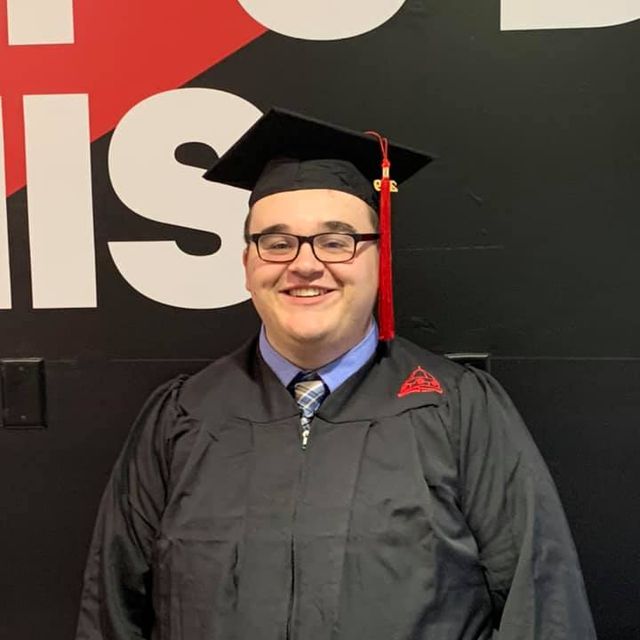
He ended up completing this degree and landing a principal position shortly thereafter. All the while though, he was racking up even more student debt in the process. To date, my dad is a mere 5 years away from retirement, yet still owes $38,000 in student loan debt between his masters degree and a parent-plus loan he took out for my sister. This is beyond depressing for him, and sheds light on the problem; student loans are nothing more than a predatory system designed to sell the idea of a better life for middle class people and below all at the cost of decades in steep loan repayment bills that hardly even chip away at the principal balance.
In summary, this move by the Biden administration is a good first step forward. Does this solve the problem? No. But is there hope that this begins the process of addressing the issue? Absolutely. However, I do have reason to believe that much work needs to be done, and that this fight is far from over seeing as Democrats have a national track record of doing measures half-assed (i.e. COBRA subsidies during Covid) and other means-tested measures to appease the rather fictitious middle-of-the-road voter. Although, this will do for today; one day, hopefully in my lifetime, this period of immense student debt characterized by retirees paying on loans from their pre-erectile dysfunction days is a distant memory.
 Home of The Worst Fans in Baseball Podcast
Leave a comment