
By Tom
Hey y’all let’s check in on the St. Louis Cardinals and see how they’re doing!
Oh…well, they’re certainly going through it. And if the most toxic parts of the fanbase weren’t already prolapsing with venom, then this little deep-dive is sure to engender them with more frothing rage.
The 2023 St. Louis Cardinals return essentially the same roster they had in 2022. The retirement of franchise favorites Albert Pujols and Yadier Molina headlined a departing class that also saw Jose Quintana, Alex Reyes, and Corey Dickerson leave as free agents. Q got hurt after signing a contract with the Mets, Reyes is still recovering from shoulder surgery–currently on a one-year deal with the Dodgers who are employing a revamped Shelby Miller–and Dickerson is on the 10 day IL with the Nationals.
Needless to say, the core of the Cardinals has remained intact, with the only major “shakeup” coming from the Harrison Bader and Jordan Montgomery trade. Despite Bader getting sent to the AL East, the Cardinals broke camp with a bloated outfield, a good problem to have unless you’re one of the players they elect to bench or get taxied down to Memphis–as of writing this, the Cardinals just optioned Jordan Walker to Memphis only to bring back up Taylor Motter who they just DFA’d to call up Paul DeJong, meanwhile Walker gets used to draw tickets and Juan Yepez continues to waste away talents that would better suit an MLB roster.
Arenado and Goldschmidt are still at the corners, with Gold Glove winners Tommy Edman and Brendan Donovan shoring up the middle. The biggest addition made in the offseason was signing Cubs catcher Willson Contreras to a six-year $87.5 million contract. Contreras has, arguably, been a top 3 hitting catcher in MLB since debuting in 2016, so what the Cardinals lacked in offensive prowess in an elderly Molina and an anemic Andrew Knizner, they made up for in Willson. What they sacrificed was Molina’s steady glove, strikezone navigation, and pitch-calling.
Willson has shown holes in his defense, but has been league average with a tremendous arm. Cards fans are used to defensive excellence, and while I love Willson he is definitely not going to deliver that, but he’s not going to be an auto-out or rally-killer with runners on. It’ll work in time, so ease up on him.
Speaking of time, the Cardinals seem rather content with wasting it. As of writing this, they’re halfway through a 10 game West Coast road-trip! They’ve won one game so far and currently sit at 9-15 for the season. They have yet to win the first game of a series this entire year–something our manager, Oli Marmol, will tell you is not that important in the grand scheme of things. Just to pour salt in the wound, the 5-19 Oakland Athletics have won the first game of their series 3 times already.
Not capturing that first game has been an encompassing feature for the Cardinals this season: playing from behind/behind the eight-ball/turning in your homework late, idk this team is not good at the moment. The Cards have played in 7 series so far and have won 2, lost 5, and split 1–with the first-place Pittsburgh Pirates–and, if they’re lucky and good again, may split this series with the Giants, sorry, I wrote this before watching them drop game 3, so if they’re lucky and good they may not get swept!
Despite posting a top 10 fWAR and wRC+ the offense has been feast or famine, being shut out 3 times already and scoring 4 or fewer runs 16 times this season. Until their 14-run outburst against the Diamondbacks, the Cardinals were among the bottom tiered teams with RISP and RISP/2 outs, their recent string of good fortune–i.e. THAT game and a couple of fortunate rallies in Seattle and last night–have seen their RISP numbers rise to 15th and 12th respectively.
What has butchered the Cardinals this season has been starting pitching. You knew this, the front office knew this, the Pirates knew this, we all knew this. Post the stupid meme.
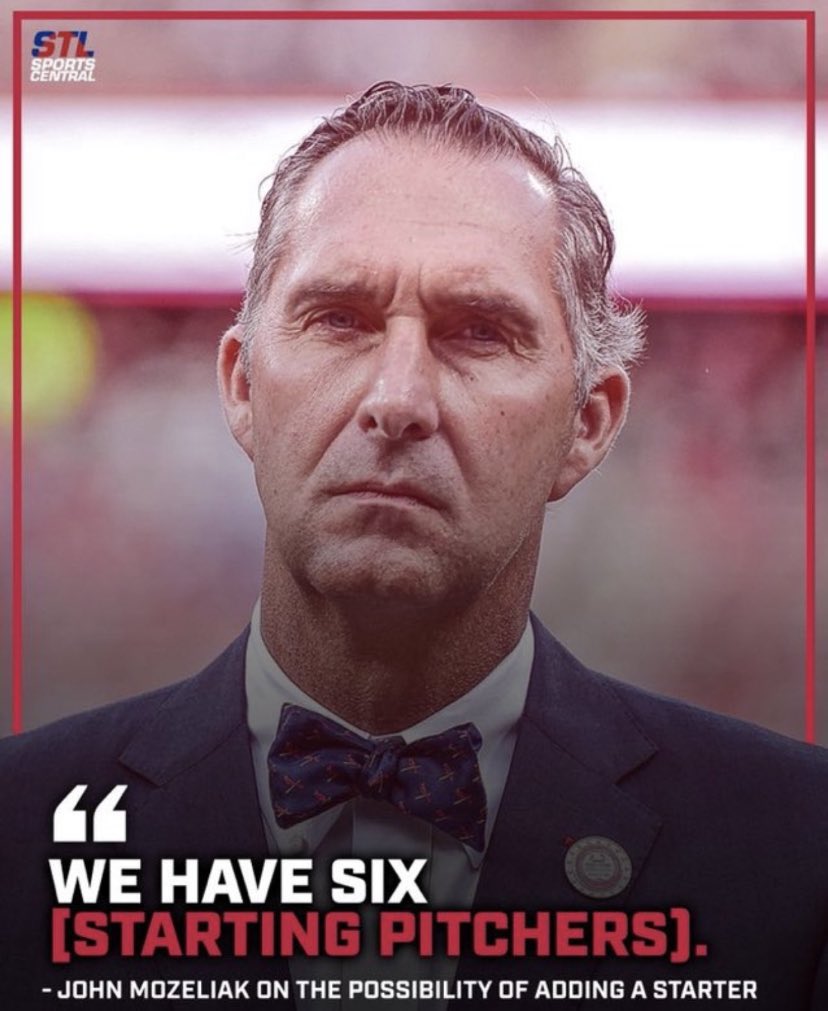
A bottom 10 starting rotation that sports an ERA in the same company as the floundering Chicago White Sox and Detroit Tigers, has the 9th lowest K%, and the 3rd worst batting average against. It’s as if letting the ball be put in play is a bad thing sometimes, especially with a defense that has regressed to the mean this season. You can see why as we play new-comers Alec Burleson and Jordan Walker in the corner positions while making Dylan Carlson sit, the occasional Nolan Gorman game–who is awesome btw–and playing guys out of position.
A defense that can’t snag everything for you means the flaws that the front office was hoping to cover with this starting staff are now blown wide open, and is now fielding a team off to its worst start in 50 years. I’ve mentioned this before on the podcast, but the way this team is constructed they’re not going to win too man low-scoring games, and if the offense is not dropping 5+ runs a game they’re going to get stretches like these.
Even worse, the Cardinals faithful have descended into a new level of hell where only the bluest of blue checkmarks come out to say some of the most off-putting and needlessly odd shit. It’s making my co-host, Nik, look like a LDS missionary. The Twitter venom has gotten so bad that Adam Wainwright, set to return in the next couple weeks, felt the need to say something not once, but twice.
So as the sky falls around us for a team owned by someone whose priorities are not winning championships but expanding his real estate holdings in downtown St. Louis, along with getting sports gambling legalized, I figured I’d take a look at the last hundred or so Aprils the Cardinals have endured.
Last year’s squad–same guys, remember–ended the month with an 11-9 record. Prior to how things are likely to shake out for this current core, the Cardinals have not finished a March/April stint below .500 since 2007, when they sported a 10-14 mark and went on to win 78 games–the last time they finished below .500 too.
Historically, believe it or not, April is the worst month for the Cardinals. Since their transformation from the Perfectos in 1900, the Cards have a .514 winning percentage for the month, that’s just a smidge lower than their next weakest months May and June.
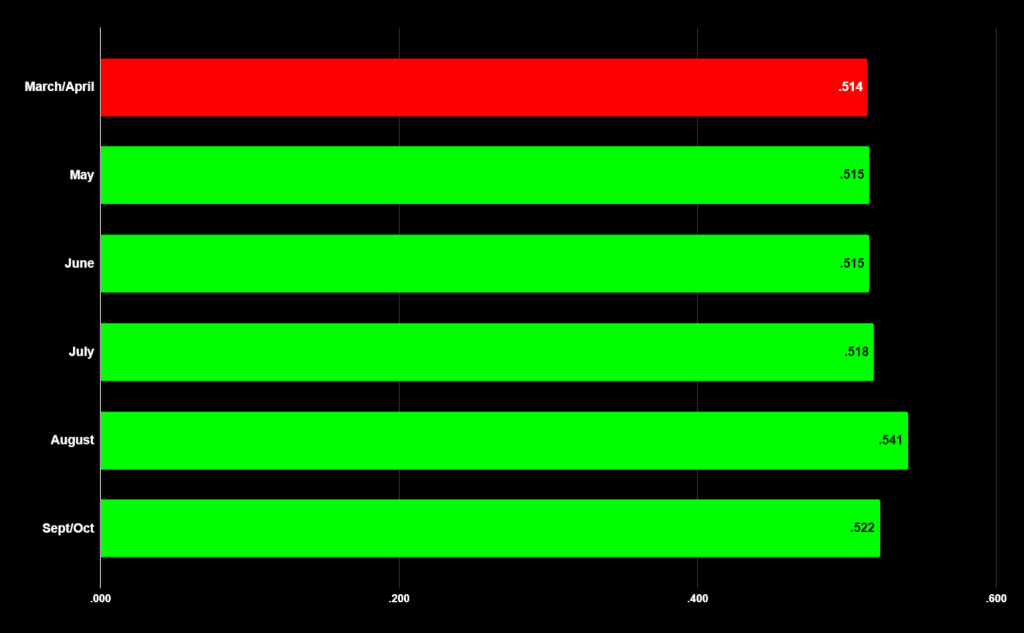
Due to recency bias, you figure May and June would be miles ahead. We all endured the 10-17 June in 2021 and the 9-18 May in ‘19. For the decade, the Cardinals finished above .500 in every month except June (133-134).
While the Cardinals historically have had some putrid starts, the problem for the 2023 squad is that this hasn’t happened in some time. Even during the malaise period of the 1990s, the Cardinals finished the month 10 games above .500, for that whole decade it was their only month they finished above .500 on. The 1980s saw swoons like the ‘88 squad dig an 8-14 hole so deep they’d never pull out of it. The same with ‘86 and ‘84. It was kind of the mantra for Herzog’s teams during that span, if they weren’t World Series caliber, they were likely stepping on a few rakes.
Some of these runs lost people their jobs. Take the 1978 squad that was headed by Vern Rapp. Rapp enjoyed a successful ’77 season but made a terrible habit of fostering a hostile clubhouse. He enforced dress codes and had Al Hrabosky shave off his mustache. One time he tore up the clubhouse after he caught his team playing music following a lost. His most infamous public feud came when he called Hall of Famer Ted Simmons “a loser.”
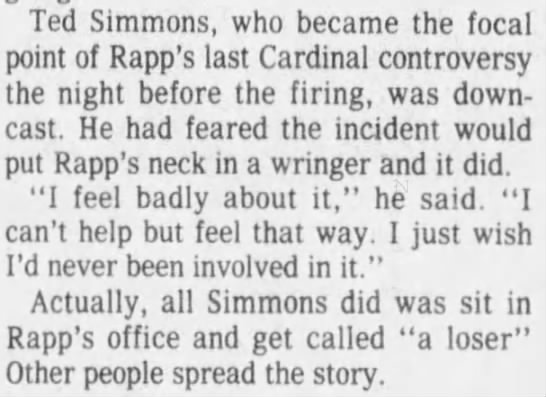
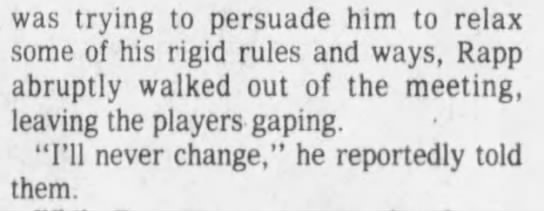
Lou Brock even led a player’s meeting to try and get Rapp to ease up on his rigid mindset–one that he fostered grinding his way through the minor leagues–but Rapp had none of it, he abruptly walked out of the meeting and told his players he’d never change. So after a win in Montreal that saw his record climb to 6-11, Rapp was summarily fired by GM Bing Devine. The Cards finished the month 9-12, lost 20 of 29 in May and finished the season with 69 wins.
Oh, and then there’s Kenny Boyer, who had taken over for Rapp a couple games later. Boyer finished the ‘78 campaign out at 62-81, but the players liked and respected him for the most part. The following season he managed an 86 win team, but 1980 came along and the Cards stumbled to 8-10 in April and continued losing miserably well into May, so much so that Boyer lost the clubhouse and command of his players, and by the time he was fired he was rather despondent, and basically said he had seen it coming.
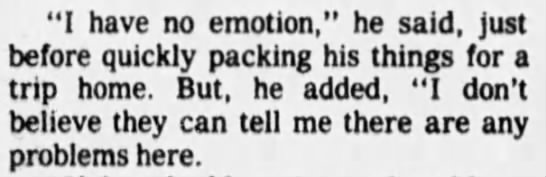
Those are some exceptional cases. To this day Vern Rapp owns the dubious distinction of being the fastest manager-manager to get shit-canned that early into a season, but there are other ones.
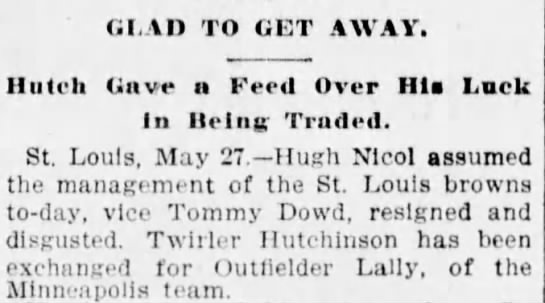
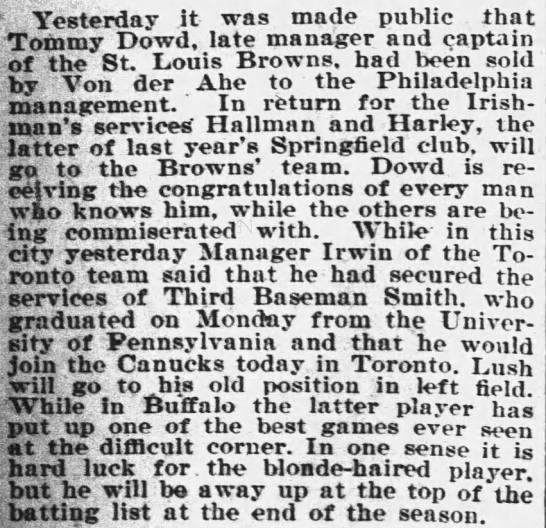
Back in 1897, when the Cardinals were the Browns, then player-manager Tommy Dowd resigned in disgust after a 6-22 start and about five days later he was traded to the Phillies. That Browns team finished the season 29-102. There’s also aging veteran and Hall of Famer Kid Nichols, who was also demoted from manager after a 5-9 start in 1905 and because baseball is a mean bitch, he was waived and also picked up by the Phillies. Nichols’ team started off 3-8, and didn’t fare much better under Jimmy Burke and Stan Robison as they cratered to a 58-96 record. The following year they won 6 fewer games.
Funnily enough those 58 wins would be the 3rd most in a season for the Cardinals that decade, as the ‘Birds languished in the National League cellar until the 1920s, and honestly if you take away those first 20 or so years the Cardinals present themselves even better as a storied franchise. Since 1900, they have had a winning record every month.
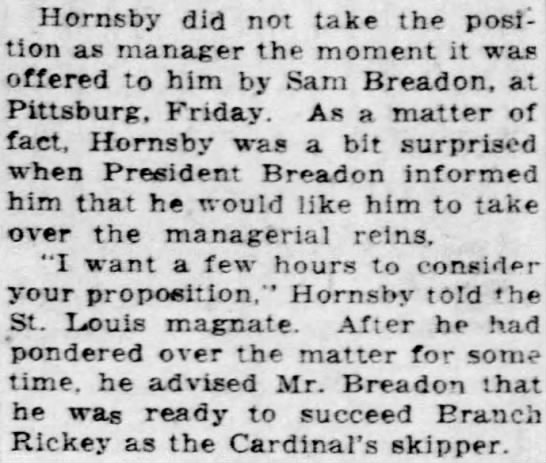
There’s also Hall of Famer Branch Rickey whose 1925 squad started off 5-8 before descending to the depths by the end of May with a 13-25 record. Rickey was fired and player-manager Rogers Hornsby promoted, who willed the team to a 64-51 mark the rest of the way and a World Series trophy the following year.
Solly Hemus oversaw a 4-13 start to the season, but kept his job, despite being an ardent racist. Eventually the rest of the society, but most likely his failures as a manager, caught up to him in 1961 after a 7-9 start to the season began a string of 3 consecutive losing months that saw him ousted and replaced with Johnny Keane.
Not all of these failures have to be sad, there are incredible moments of resiliency on behalf of managers and players.
I haven’t even mentioned the worst start, I’m talking that start to the season. The worst April in 50 years occurred in 1973 when a Red Schoendienst led Cardinals bumbled–and boy do I mean bumbled–out of the gate to a 3-15 April mark. None of those wins came back-to-back, none of them within a series, although 2 of them were the first game of a series–so maybe Oli does have a point. After a May 1st loss to the Padres saw them fall to 9 games back in the NL East, people were beginning to wonder if some people should lose their jobs.
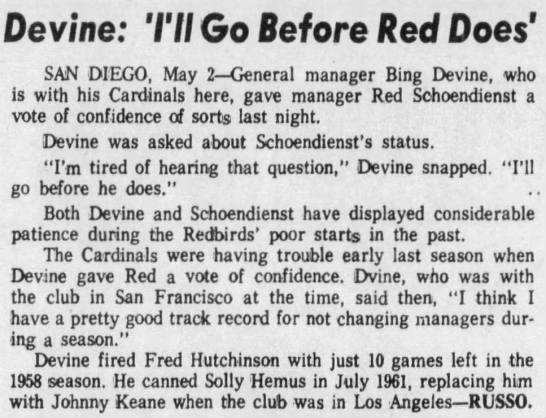
But Bing Devine had Red’s back, in fact he was tired of being asked that by the press going so far as to publicly state that he’ll leave the team before Schoendienst does. The ‘73 Birds were nothing to write home about, but they retained some noticeable hitters from a ‘71 squad that finished with 90 wins. Among them were Jose Cruz, Joe Torre, Ted Sizemore, and Ted Simmons.This was also the last season they’d get a really good year out of an aging Bob Gibson, who at one point threw 6 consecutive complete games through May and June. This 3-15 team had no power, mustering only 5 home runs compared to the first-place Pirates who already pounded 26 long-balls. This power outage would continue the rest of the year for the Cardinals as they hit a league worst 75 home runs, with only Cruz, Torre, and Simmons cracking double digits.
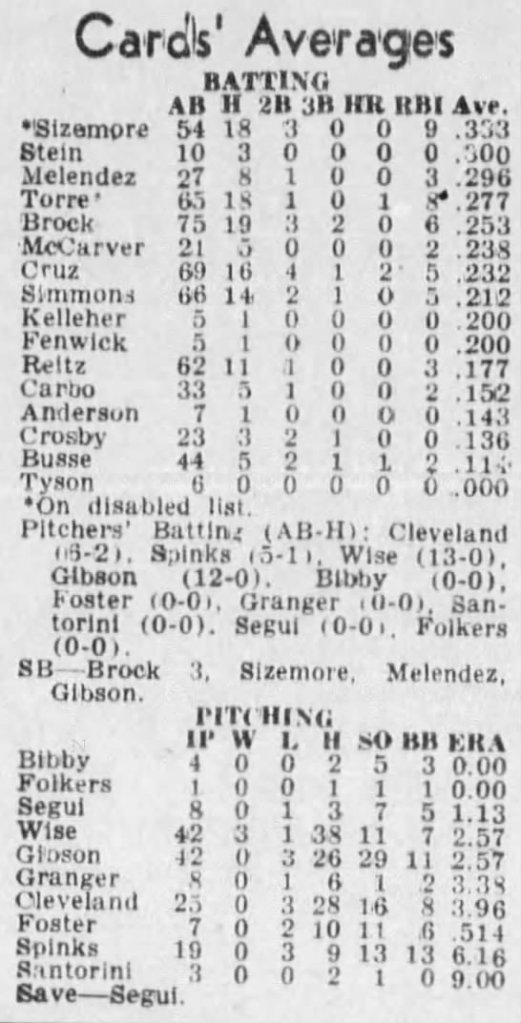
Let’s not even get started on the metrics. This Cards team had a league worst .574 OPS by the end of April. Through a team’s first 18 games the ‘73 squad’s OPS wasn’t the worst ever, but it was bottom 100, and the 6th worst for the 1970s–for trivia purposes, the best 18 game start by OPS is owned by the 2000 Cardinals squad. The entire team struggled in this aspect being led by right fielder Luis Melendez and his potent .700 mark. MVP Joe Torre was slugging .338, Ted Simmons had an .560 OPS, Lou Brock was .629, and everyday third baseman Ken Reitz’s offense could be considered a war crime. Reitz had a .421 OPS by the end of the month, and wouldn’t improve much the rest of the way finishing with a .589 in 446 plate appearances, good enough for 11th lowest in the Majors for players with 400 PAs and the 7th worst in wRC+.
The pitching was fine too. Actually it was pretty good and without it this team may have been 0-18. By the end of the season the ‘73 Cardinals would have the 3rd highest fWAR in the majors, but in April they kept things close with a 3.44 staff ERA, good enough for 11th among their peers. They weren’t getting murdered in these games, they had a -23 run differential and lost 11 of those 15 games by 2 runs or less.
By the end of May though things had begun to turn around, and it appeared Bing’s confidence in Schoendienst earned them both a bit of rope from Gussie Busch. A 16-2 run from mid-May to early June got the Cardinals back to within .500 range, and by the end of June a team that had found themselves 15 games under at one point in the season were back at .500.
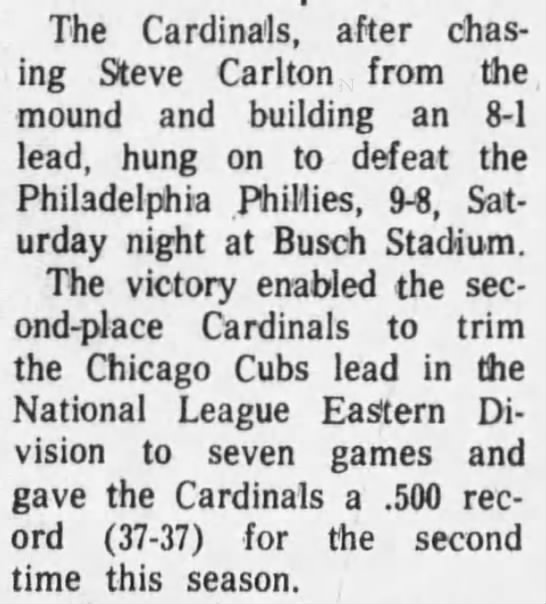
A 19-11 July run had the Cards not only with a winning record but also first place in a sluggish NL East division. After winning game 2 of a doubleheader against the Mets in August, this squad was up 5 and 11 games over .500.
But this was the perfect time for things to implode. After that doubleheader sweep the Cards would drop 8 in a row and finish August 12-18, they slipped even further and lost first place on September 12th. Going into the last 5 games of the season they were 76-81 and 4 games back, and despite winning out to finish at .500 they missed the playoffs by one measly game to the Yogi Berra led Miracle Mets.
There was also the ‘85 squad that started the season 8-11 and dominated the rest of the way to 101 wins and a World Series berth. After years of coming up short and mediocrity, the ‘96 Tony La Russa led squad ate dirt with a 12-15 mark before rallying to an 88 win divisional crown and a monstrous NLCS collapse to the Braves. Despite their dominance, the teams of the 1940s finished April with a 59-47 mark, the worst month during the Musial Era. The 1934 team started 4-7 before posting a blistering 21-6 May en route to a World Series title. The best April the Cardinals ever had was probably that 2000 squad that went 17-8 and posted a team OPS of .959, which to this day is still undefeated in MLB history.
The 1954 team had maybe the worst pitching start by ERA with a 6.06 mark, followed by a ‘94 squad that would set the foundation for Joe Torre’s firing a year later. The 105 win 2004 squad began the season with a 6+ ERA through their first 13 games, but finished April with a 12-11 mark and 4.66 ERA. In terms of dominance, the 2014 squad posted a gnarly 2.87 team ERA and struck out 253 batters through 260 innings, and finished April with a 15-14 mark.
Early season woes were not uncommon for the Cardinals, and you’re probably wanting to know which months they performed best in and yes you already know the answer to that.
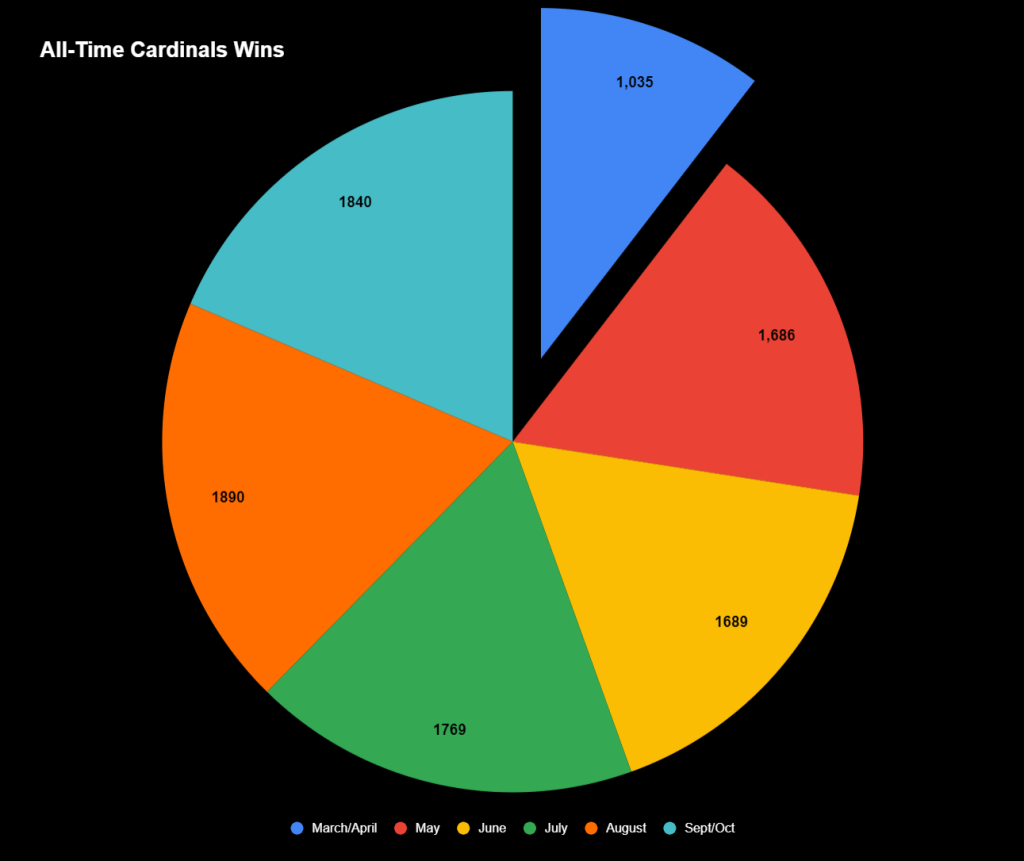
St. Louis’s pact with the Devil has allegedly been in effect since 2011, but the Devil appears periodically for the Cardinals. St. Louis, historically, plays their best baseball in August and September/October, owning a .541 and .522 winning percentage respectively. They have had some horrendous dog days in the past: They won 7 of 38 September games in 1908, 5-25 in 1916, and 10-21 in in 1990–the year Whitey resigned. They won 5 of 27 August games in 1903, 9 of 31 in 1955, and 11-15 mark in 2010 that arguably cost them a division title. There are other swoons, but they are greatly outnumbered by the amount of ass-kickings the Cardinals have historically laid to their opponents.
The 1940s Cardinals went 398-202 from August until the end of the season. They had one losing record, a 14-19 mark in September 1944 that saw them still win 105 games and a World Series. They won 20 or more games 12 times during this decade, the worst record this team had was 84-69 in 1940.
The Cards have been huffing late season bam-bam since the 1930s. The World Series squads of ‘31 and ‘34 went a combined 78-34 from August on. The ‘30 squad, which lost to the Phillies in 6 games, went 44-13. If we really want to reach back, the Hornsby led 1926 team posted a 36-19 mark in the Dog Days, and the forgotten ‘28 squad–that was swept by the powerhouse Yankees–went 32-23.
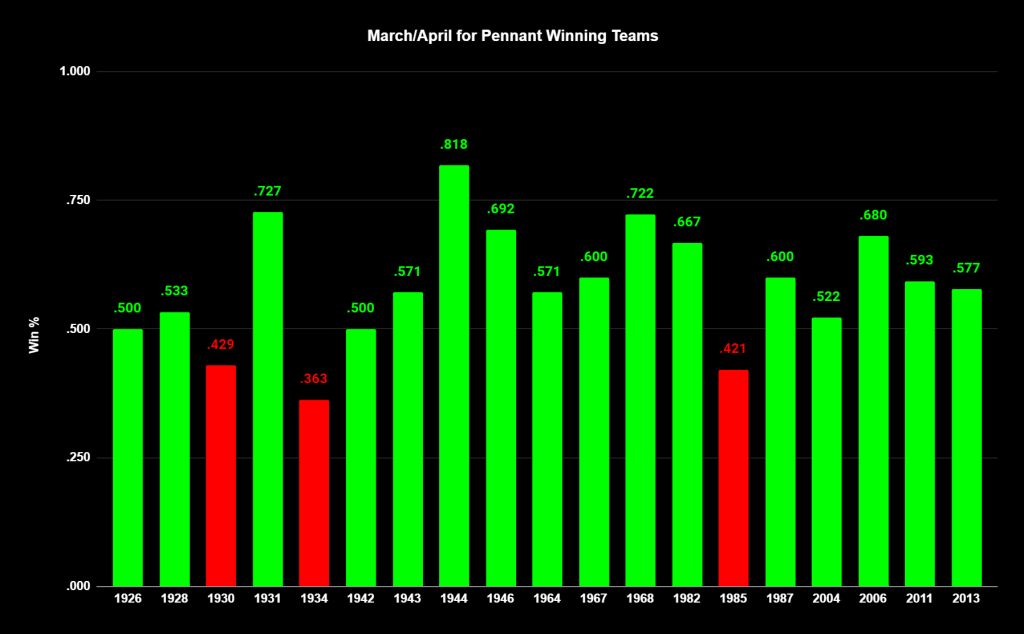
This isn’t to say the games in April do not matter. There’s a pattern here: of the 23 teams to reach the World Series, the Cardinals had losing April records with 3 of them (1985, 1934, 1930), they finished even twice (1926 and 1942), and above .500 every other time. Only once, 1968, did one of these teams finish below .500 for August and September combined.
The 2023 Cardinals remain in disarray much like the ’73 squad that needed a dramatic turnaround to not only sniff a playoff spot in a middling division, but to finish .500. Historically the Cardinals have entered May 51 times with a losing record, they finished the season above .500 in 20 of those seasons.
There is plenty of time to turn this ship around, but the Cardinals are playing Russian Roulette with more bullets. Historically, an April deficit isn’t the end of the world, but certainly not doing a team any favors whenever they enter summer chasing their division rivals. With more games this season outside of the NL Central, the Cardinals are going to face a harder path to the playoffs with their current sub .500 effort, and with the continued impressive play of the upstart Pirates, Brewers, and Cubs every mistake made will only metastasize into what has already been a historically deep and cavernous hole.
 Home of The Worst Fans in Baseball Podcast
Leave a comment